Age Breakers
- 3.3
- Rating
- 500.00K
- Installs
- Free
- Price

 Analysis by App-foxy
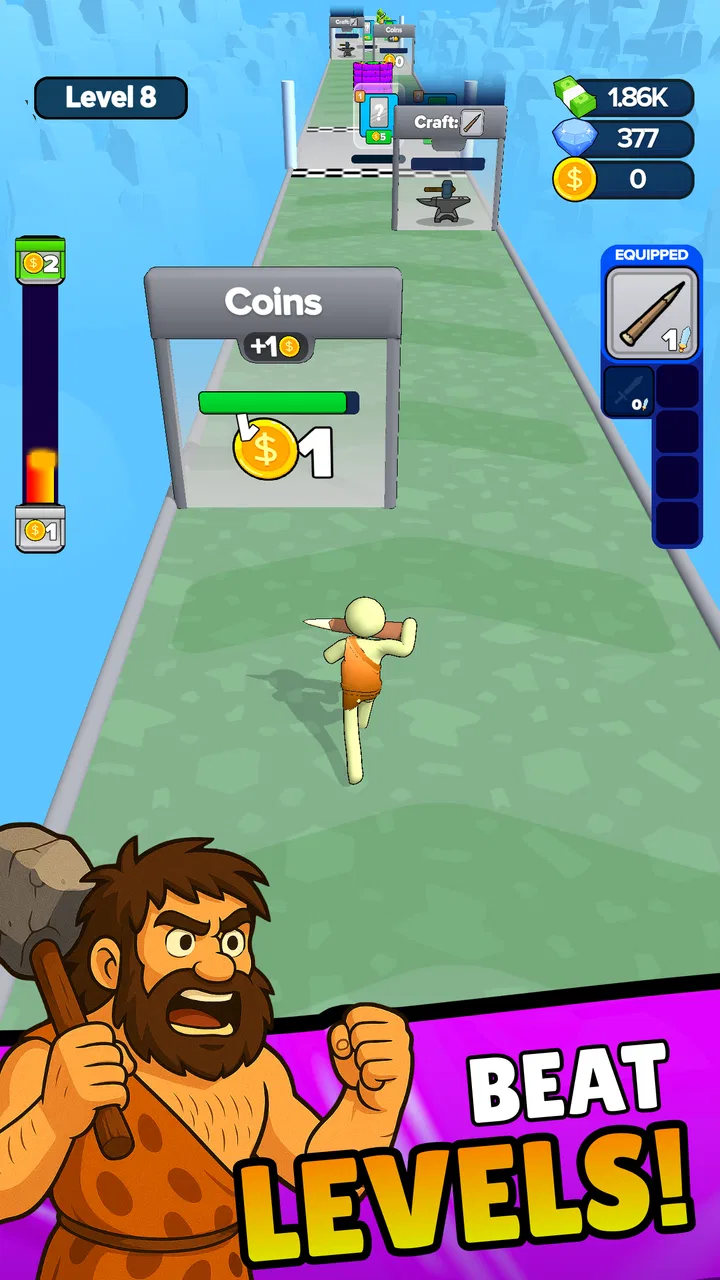
Age Breakers is an adventure game built around one clear idea: breaking through time. That concept gives the experience its identity, but it also sets the right expectation before you install it. This is not the kind of game I would choose for a deep, story-heavy journey or a complex role-playing system. I see it more as a quick, accessible mobile adventure for players who enjoy moving through a simple premise and discovering how far its central time theme can carry the action.
I tested it with the mindset I use for short mobile sessions: a few minutes during a break, a longer sitting when I wanted something light, and repeated returns to see whether the main idea remained appealing. My overall impression is mixed but useful. The game is easy to approach, free to start, and suitable for Everyone, yet its modest average rating of 3.2 from around 9,100 ratings suggests that its straightforward design will not satisfy every type of player. For me, the key question is not whether it offers the biggest adventure on a phone, but whether its time-focused hook gives you enough reason to keep coming back.
Breaking through time is the game’s real identity
The strongest part of Age Breakers is the way it puts its central capability in front of the player instead of hiding it behind a long setup. The store summary, “Break Through Time!”, is brief, but it points toward the experience I found most important: progress is framed around crossing from one point or state to another, with time acting as the idea that connects the adventure together.
You May Also Like

 Blood Strike: 2.5 Anniversary
Blood Strike’s Loadouts Turn Every Drop Into a Tactical Gamble
A close look at Blood Strike’s custom loadouts: how fast access to signature weapons reshapes its battle royale rhythm, rewards preparation, and narrows the gap between fights.

 Pandora - Music & Podcasts
Pandora’s Music Is Easy to Start, but Harder to Recover
Pandora’s strength is its low-effort path from a seed to a station. Its weak spot is how much confidence it asks you to place in connection, setup, and quiet recovery.

 8 Ball Pool
 Is Built on Rivalries, Rematches, and Routine
A close look at the rivalries, rematches, shared routines, and unanswered safety questions that turn a quick pool match into a persistent mobile community.

 Samsung Music
’s Quiet Strength Is Playing What You Already Own
Its reach comes less from spectacle than from dependable access to a personal library. That simplicity is both the app’s strongest retention engine and its ceiling.

 AccuWeather: Weather Radar
AccuWeather Review: A Quick, Clear Forecast for Everyday Decisions
For everyday plans, the best forecast is the one you can understand quickly. AccuWeather makes rain timing, radar, and local conditions easy to act on, with a few trade-offs.

 Hill Climb Racing
Why Hill Climb Racing Still Turns Crashes Into One More Run
A tiny car, a bumpy hill and one more upgrade: Hill Climb Racing keeps resurfacing because its simple chaos makes every near-miss feel personal.
More From Our News Desk
View All News


That focus matters because many mobile adventure games can feel interchangeable. They may have bright environments, simple objectives, and short stages, but the setting often becomes decoration rather than a meaningful part of play. Here, the time-breaking premise gives each forward step a little more context. Even when the moment-to-moment interaction is uncomplicated, I was paying attention to what the next transition might represent rather than treating every section as just another level.
The useful way to think about the game is as a focused time-progression adventure, not as a full simulation of history. That distinction helped me enjoy it more. If you expect detailed historical accuracy, elaborate branching timelines, or a large narrative with many characters, you may feel that the concept is being used lightly. If you want a mobile game that turns a familiar idea—moving through different eras or stages—into a quick playable loop, the premise is easier to appreciate.
The game comes from Rollic Games, a developer known for approachable mobile experiences. That background is visible in the design philosophy: the entry point is uncomplicated, the concept can be understood quickly, and the game is comfortable for casual play. It is categorized as an Adventure title, but I would place it toward the accessible end of that category rather than alongside demanding exploration games.
How the central idea feels during ordinary play
In practice, the time theme works best when I let it guide my attention without expecting it to do all the work. I found myself using each short session to answer a simple question: how much further can I move through the current sequence before I stop? That makes the game naturally suited to small bursts. I could begin without needing to remember a complicated plot or rebuild a large strategy from memory.
This is also where the game’s limitations become visible. A strong premise can make the first sessions feel fresh, but repeated play depends on how much variety the actual tasks provide. When the interaction is familiar, the time concept has to supply enough curiosity to keep the routine from becoming predictable. I noticed that the appeal was strongest when I was still anticipating the next change, and weaker when progress started to feel like a repeated procedure.
My practical tip is to treat the time mechanic as a reason to set small goals rather than as a promise of endless novelty. Instead of opening the game with the expectation of a long uninterrupted adventure, I would play until reaching a natural transition, then decide whether the next section deserves another session. That habit makes the experience feel less repetitive and avoids turning a casual game into a chore.
Another useful approach is to pay attention to the rhythm of progress rather than rushing every action. In a game centered on crossing time, the transition itself is part of the reward. If you focus only on clearing the immediate task, you may miss the small sense of movement that gives the game its character. I found that slowing down just enough to notice how the current stage leads into the next made the concept feel more coherent.
A realistic use case: short breaks and low-commitment sessions
The best everyday scenario for Age Breakers is a short break when I want something interactive but do not want to commit to a complicated game. Imagine waiting for an appointment or taking a few minutes after lunch. A large adventure game may demand too much concentration, while a competitive game may make a brief session feel stressful. This title fits better when the goal is simply to make a little progress through its time-based adventure and then put the phone away.
It is also a reasonable choice for someone who shares a device with a younger player, since the content rating is Everyone. That does not automatically make it the perfect game for every child, because attention span and preferred difficulty still matter, but the age classification removes one common barrier for family-friendly use. I would still introduce it as a simple adventure rather than promising a large educational experience about history or time.
For travel, the decision depends on what you want from a game. If you need a rich offline journey or a title that can occupy an entire trip with deep systems, I would look elsewhere. If you want something lighter to open between activities, its compact design is more suitable. The game’s value comes from low commitment, not from replacing a console-style adventure.
One small workflow helped me get more from it: I used a fixed stopping point. I would play until a clear advancement moment, pause, and return later rather than continuing until the mechanics felt repetitive. This made the game easier to fit around daily routines and preserved some curiosity for the next session. It is a simple adjustment, but it matters for a title whose main attraction depends on forward movement.
Where the free model helps and where it may interrupt
Age Breakers is free to download, which makes trying its central idea easy. I did not have to decide in advance whether the time theme was worth paying for. That is important for a casual adventure because the concept is something you can judge quickly through use. A free starting point also makes it more suitable for occasional players who may only open the game now and then.
The tradeoff is the presence of in-app purchases ranging from $0.99 to $99.99 per item. That is a broad range, and it changes how I would recommend the game. Someone who is happy to play within the free experience can approach it casually, but a player who dislikes purchase prompts or feels pressure to speed up progress should be cautious. The existence of optional spending can affect the mood even when you never buy anything.
My advice is to decide your boundary before playing. If you install it for a few minutes of entertainment, keep that purpose clear and do not treat every obstacle as a reason to spend. The game works best for me when I judge progress by what I can accomplish through normal play rather than by how quickly I can unlock or move past something. Players who prefer a single upfront purchase may find the usual premium adventure alternative more comfortable.
There is another tradeoff in the game’s accessibility. Simple controls and a direct premise reduce the learning curve, but they can also limit the sense of mastery. I would not choose this as my main game if I wanted intricate planning, demanding reflex challenges, or a large collection of systems to study. Its convenience is genuine, but convenience is not the same as depth.
Who is most likely to enjoy it
I think the best audience is made up of casual adventure players who like a clear theme and short sessions. The time-breaking concept gives them something to follow, while the approachable structure avoids the preparation that larger adventure games require. It is especially suitable for people who enjoy seeing steady movement from one stage or period to another and who do not need a long cinematic story to stay interested.
It may also suit players who are curious about Rollic Games’ style and want a free way to sample one of its adventure releases. The game has reached over 500,000 installs, so it has found a meaningful audience, although popularity alone should not be confused with a guarantee that it will match your taste. The rating and review volume point to a divided response, which feels consistent with my experience: the concept is inviting, but the straightforward execution will appeal more to some players than others.
I would skip it if your priority is a richly written narrative, historically detailed world-building, or long-term strategic complexity. I would also avoid making it your first choice if you strongly dislike in-app purchases or want a game with a clearly premium structure. In those cases, a paid adventure with a defined beginning and ending may offer better value, even if it lacks the immediate convenience of a free download.
Device compatibility is relatively broad because the game supports Android 6.0 and later. That makes it accessible on older Android hardware, although the experience can still depend on the condition and performance of the individual phone. The current version is 1.9.1, so I would install the latest available release rather than relying on an older package. Keeping the app updated is particularly sensible for a game whose smoothness and progression depend on regular mobile use.
How it compares with familiar adventure alternatives
Compared with large exploration adventures, Age Breakers is much easier to start but less likely to provide a world I can get lost in for hours. Bigger alternatives usually offer more characters, more detailed environments, and a stronger feeling that my choices shape the journey. This game’s advantage is that I can understand its appeal almost immediately. It asks for less time and less concentration, but it also gives me fewer reasons to analyze every decision.
Compared with endless casual games, it has a more recognizable adventure identity because the time theme gives progress a direction. An endless title may be better when I want a score chase or a purely repeatable loop. Age Breakers is better when I want the feeling of moving through a sequence rather than simply trying to survive for another attempt.
Compared with premium mobile adventures, its free entry is the obvious benefit, while its purchase structure is the main concern. A premium game may cost more at the beginning but provide a cleaner relationship between the player and the content. Age Breakers is more convenient to sample, and that makes it a sensible first try for curious players, but the total value depends on whether the free experience remains satisfying without spending.
The non-obvious tradeoff is that the game’s simplicity can be either a strength or a weakness depending on your routine. When I had only a few minutes, the lack of complexity was exactly what I wanted. When I was ready for a substantial evening game, the same lack of complexity made it feel too light. The right comparison is therefore not “which adventure game is best,” but “which level of commitment do I want right now?”
My final recommendation after living with the concept
Age Breakers is worth trying if the idea of breaking through time sounds more appealing than managing a large, complicated adventure. Its free price lowers the risk, its Everyone rating broadens its audience, and its current release is accessible to Android users on version 6.0 or newer. I enjoyed it most when I treated it as a short-session game with a distinctive theme rather than demanding the depth of a premium epic.
At the same time, I would not recommend installing it blindly to someone who wants a powerful story or a purchase-free experience. The 3.2 average from around 9,100 ratings is a useful warning that the accessible design does not work equally well for everyone. The in-app purchase range, from $0.99 to $99.99 per item, is another reason to keep expectations and spending limits clear.
My honest verdict is cautiously positive for casual players. The game’s one verified capability—the ability to frame progress as a breakthrough through time—is what makes it memorable, and it has a real effect on how I approach short sessions. It gives ordinary advancement a theme and makes the next transition feel worth reaching. But that hook has to carry a relatively light adventure structure, so players who need variety, depth, or a complete premium package should choose a different option.
If I were recommending it to a friend, I would say: try it when you want a free, approachable adventure for brief breaks, keep your purchases under control, and judge it by whether the time-progression idea continues to make each return feel interesting. For that specific use, Age Breakers is an easy game to sample and a reasonable casual companion, even if it is not the most substantial adventure available on mobile.
FAQs for Age Breakers
01What is the main objective of Age Breakers?
Age Breakers is an action-packed RPG that immerses players in a futuristic world where they must battle through various levels, defeating enemies and bosses to progress. The main objective is to upgrade your character, acquire powerful weapons, and strategically break through the ages to uncover the secrets of the game's storyline.
02Is Age Breakers available for both Android and iOS?
Yes, Age Breakers is available for download on both Android and iOS platforms. Players can find the game on Google Play Store for Android devices and the App Store for iOS devices. Make sure your device meets the necessary system requirements to ensure smooth gameplay.
03Are there any in-app purchases in Age Breakers?
Age Breakers offers in-app purchases that enhance the gaming experience. Players can buy coins or special packs to unlock premium items, characters, or power-ups. While the game is free to download and play, these optional purchases can help you progress faster and customize your gameplay.
04Does Age Breakers require an internet connection?
While Age Breakers can be played offline, certain features such as leaderboards, multiplayer modes, and some events require an internet connection. Playing online also ensures that you receive the latest updates and content, keeping your game experience fresh and engaging.
05What age group is Age Breakers suitable for?
Age Breakers is designed for players aged 12 and above due to its action-oriented gameplay and mild fantasy violence. Parents should review the content and gameplay to ensure it is appropriate for younger players. The game encourages strategic thinking and problem-solving skills, making it engaging for a broad audience.
Pros
- Engaging gameplay with dynamic levels.
- Visually stunning graphics and effects.
- Smooth controls enhance user experience.
- Frequent updates with new features.
- Multiplayer mode adds competitive fun.
Cons
- In-app purchases can be expensive.
- Requires constant internet connection.
- Occasional bugs disrupt gameplay.
- Limited character customization options.
- Tutorial is not very comprehensive.

Age Breakers
Gallery